

AI-Readiness

Everyone wants AI.
Almost nobody is ready for it.

Not because the technology isn't ready. Because the data underneath it isn't — and no model fixes that for you.

Book the executive briefing →

30 minutes · The truth, not a softened version.

Why this matters right now: every enterprise is being told AI is the answer — the latest in a 30-year line of silver bullets that began with MRP and ERP. And AI works today. Its first return is not intelligence — it is time: hours bought back on reports, analysis, and drafts, with no platform decision required. What AI cannot do is automate chaos — point it at an ungoverned process and it replicates every gap at machine speed. The scarce skill is judgment — knowing where AI pays off now, where the governance work comes first, and keeping the decisions at the leader's desk.

What ALLJOY offers

The whole picture, before you scroll.

Executive Advisory
Senior judgment, on retainer

Executive Data Risk Partner

A standing senior advisor who finds the risk the status reports miss and names it before it gets expensive.

Data Strategy

A data agenda tied to business outcomes — not a maturity model on a shelf.

Enterprise Delivery
Where the work gets done

SAP Data Migration

The S/4HANA move, landed clean — data audited before cutover, not after go-live.

Enterprise Data Quality

Rule-level measurement and remediation of the critical data driving planning, supply, and finance.

Data Governance

Ownership, standards, and operating discipline that survive after the consultants leave.

1997
Since

Nearly thirty years of Fortune 500 transformation experience across data and program management — ERP programs, enterprise data quality at scale, and the executive governance that determines whether they land. ALLJOY audits the data itself, not just the process around it.

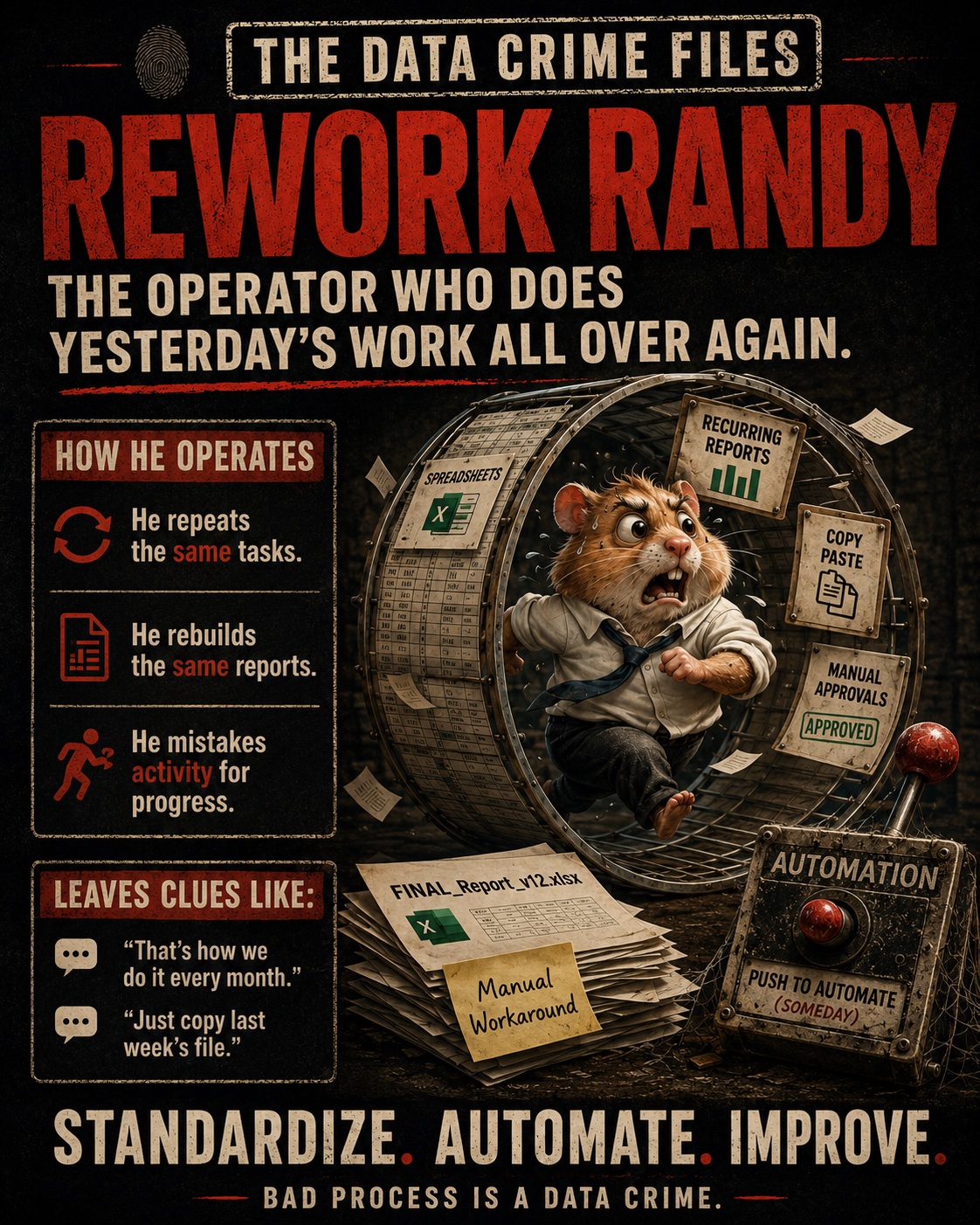
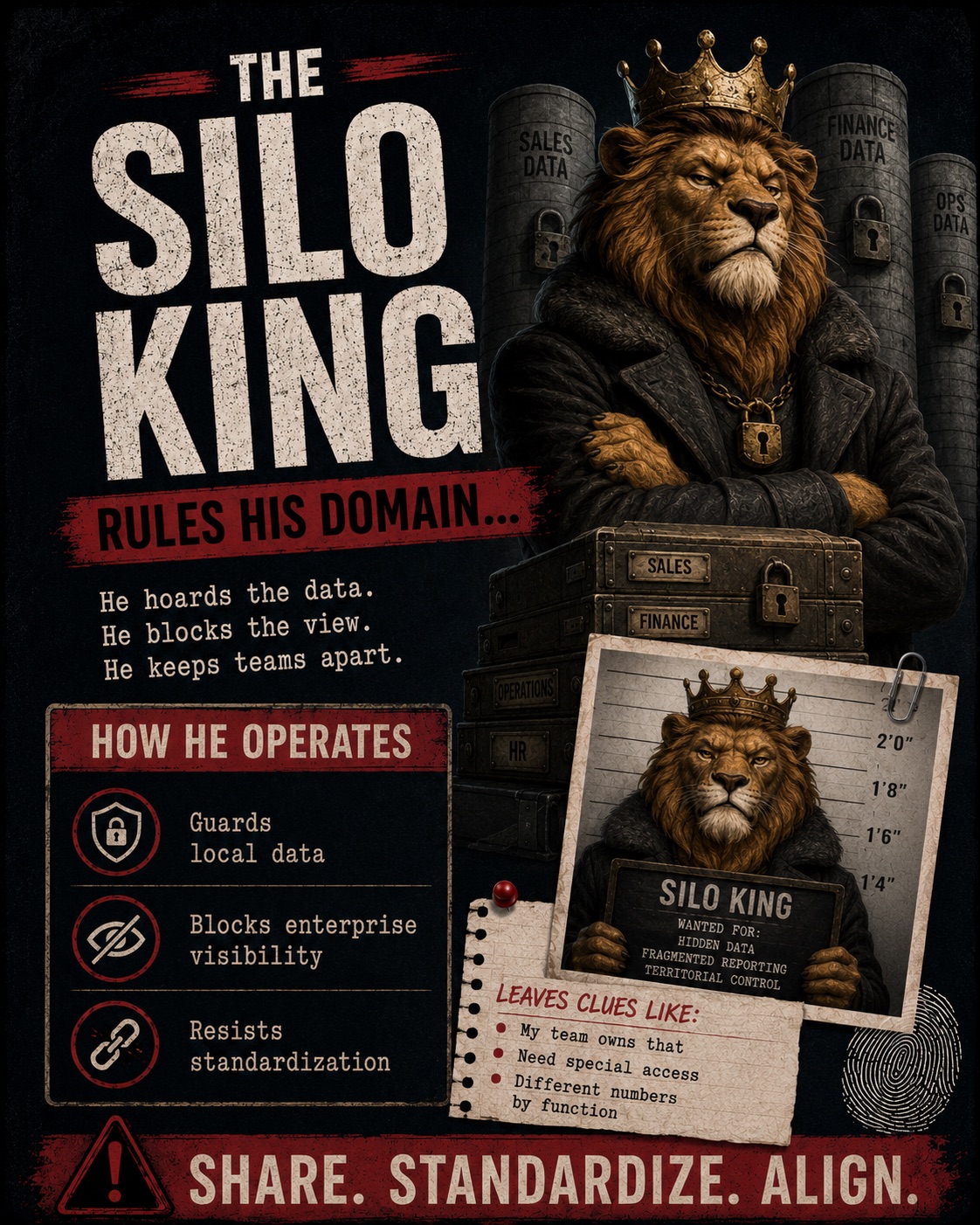
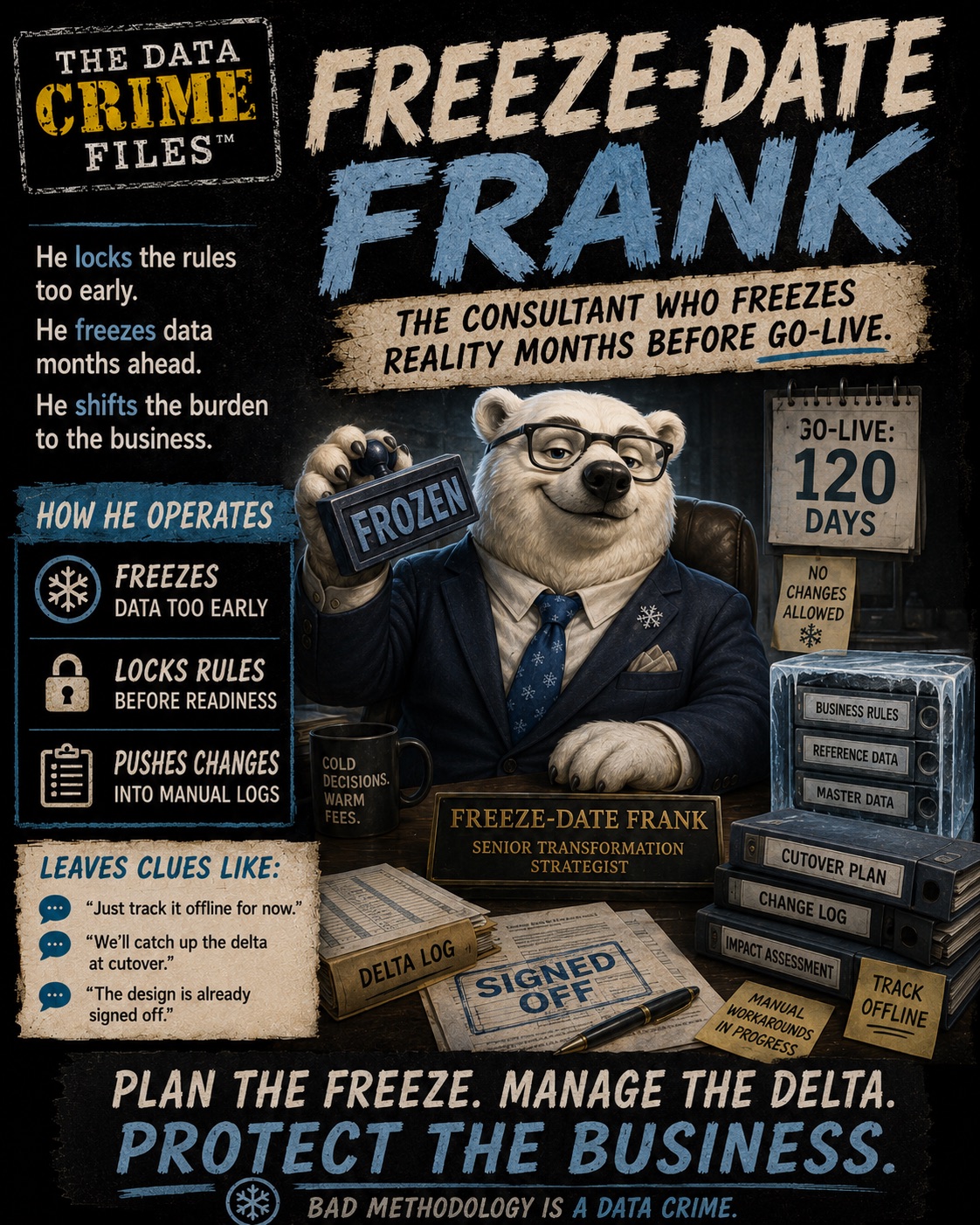
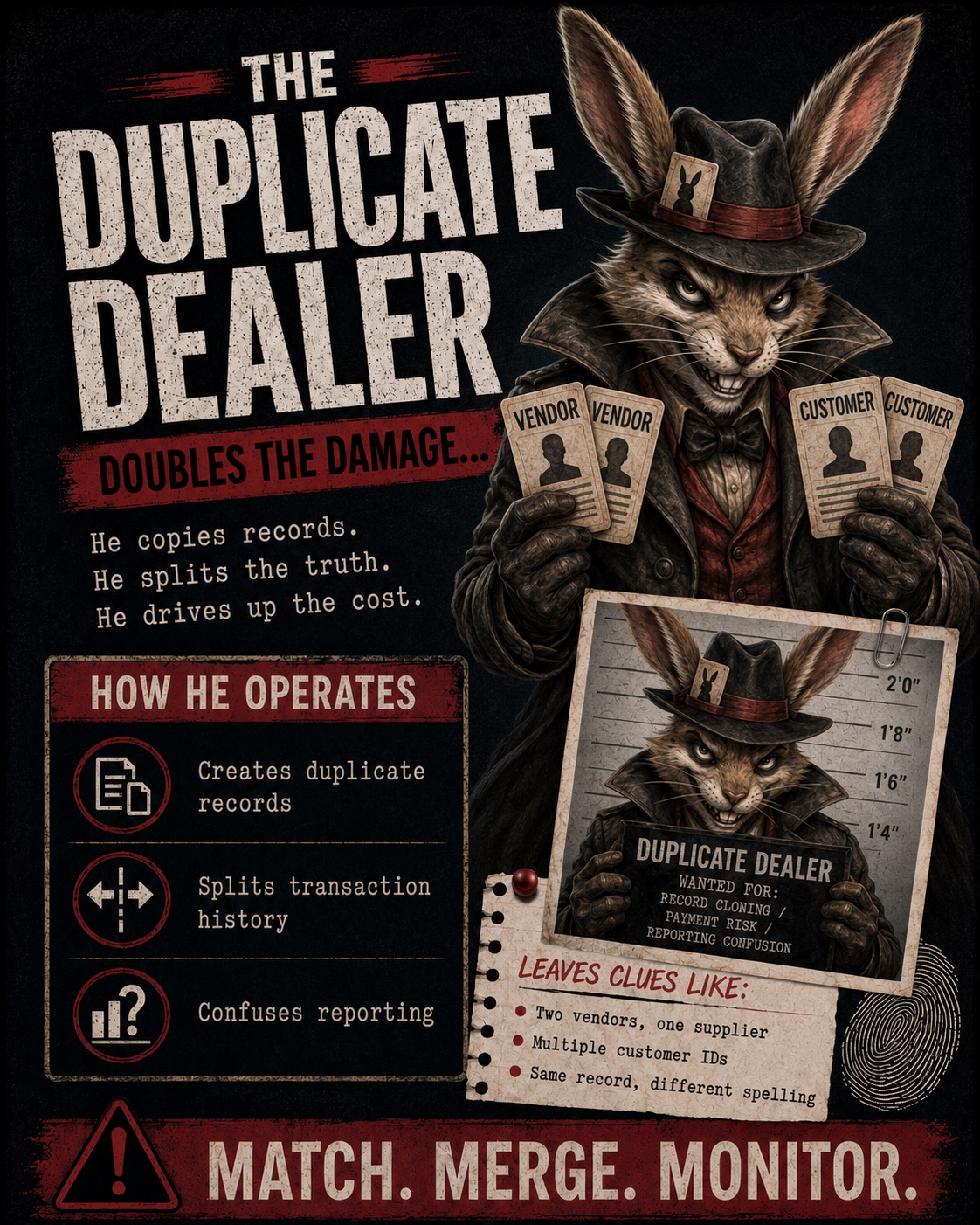
The Data Crime Files™

Meet the usual suspects.

Every troubled program has the same cast of villains — each one a data crime in a tailored coat. We name them, so you can spot them before they bill you.

Open the files →
The pattern

This is not a new problem.
This is a new name for it.

For thirty years, the industry has sold the same promise with a different label on the box. MRP would fix the planning. ERP would fix the process. BI would fix the visibility. Big data would fix the decisions. Digital transformation would fix everything. Each one arrived carrying the same quiet hope: that this would be the thing that fixes the problem without the work of fixing the problem.

It's wanting to be strong without lifting the weights. Wanting to be a millionaire from the couch. The technology was never the missing piece. The discipline was — and it still is.

What preparation looks like

Reading about the work is not the work.

Most leadership teams already know their data isn't ready. They read the articles. They listen to the podcasts. They send people to the conference and nod through the keynote about data quality. Another year passes. The data doesn't move.

That isn't preparation. That's admiring the problem.

Preparation is an audit of the actual data, an owner named for every critical element, and a control at the point of entry. It is finishable work with a date on it. A maturity study is not that, and a year of readiness theater is not that — the difference is whether anything moved.

Why AI is different

AI is the first one that punishes the shortcut immediately.

Every technology before it would tolerate bad data, because humans sat in the loop quietly compensating for it. The planner who catches the stale lead time. The buyer who knows which vendor records to distrust. The analyst who "fixes" the report before the meeting. That compensation is invisible to leadership — it appears on no dashboard — and it does not transfer to a model.

AI removes the humans from the loop. The errors your people absorb today become decisions your systems make tomorrow — systematically, at machine speed, with no one there to catch them.

AI amplifies what exists. If the foundation is weak, it amplifies the failures.

The first honest look

You don't have to be ready today.

You just have to take the first honest look. The companies that will win with AI over the next five years are not the ones with the biggest model budget. They're the ones that did the work while it was still cheap.

Two weeks on your real data. You'll know exactly where you stand — and exactly what to lift first.

Book the executive briefing →
Software, where it earns its place

We build software when judgment isn't enough.

ALLJOY Consulting delivers judgment. JoySoft is the software we build when a client's data delivery problem can't be solved with judgment alone.

Built on the same discipline that runs the partnership.

Deployed today at
Parker Hannifin · Summit Motorsports Park
Learn more about JoySoft →
The thesis

Data failure is a leadership failure before it is ever a system failure.

Most failures are visible early. They are simply not acted on early — because the firms running the program weren't built to find them, and the methodology that would have caught them is not the one they're running.

Fortune 500 transformation programs across
Consumer packaged goods
Pharmaceuticals
Consumer health
Energy
Industrial manufacturing
Aerospace & defense
Packaging & paper
Enterprise software
The cost of getting data wrong

A small share of errors drives most of the cost.

A small share of bad records drives most of the damage, and almost none of it is visible until it lands. We show you counts and risk on your own data — we do not put a dollar estimate on your program; your PMO already knows the run rate.

Annual cost
$12.9M
Gartner puts the cross-industry average cost of poor data quality at $12.9M a year.
Isn't good enough
99%
Ninety-nine percent of your materials can be right, and the one percent can shut down a plant.
Migration outcomes
83%
Gartner finds 83% of data migrations fail or run past budget and schedule. The tools spread. The discipline did not.

What you pay for senior judgment is small.
What you pay for its absence is not.

Core values

Every data problem traces back to leadership.

Data is not good or bad on its own. It is a record of the decisions, processes, and standards someone set — or did not. Nearly thirty years inside SAP data programs taught us what that costs, and what to do about it.

It's a leadership problem.

When a program goes sideways, the data usually gets the blame. But the data did not decide to skip the ownership conversation, tolerate the silo, or leave the design call unmade for six weeks. People did. Most leaders are not failing on purpose — they have been handed something they were never equipped to lead.

What it means

That is fixable, but only if someone says it out loud.

Pay now, or pay at go-live.

A bad record costs almost nothing to fix when it is created. It costs roughly ten times more during the project, when it is cleansed under deadline pressure. At cutover it costs ten times more again. After go-live, it can stop a line. We have seen that last one: one missing Production Version, a production line down for three hours, about $70,000 — twenty years ago.

What it means

The cheapest moment to fix a record is the moment it is created.

99% isn't good enough.

Ninety-nine percent of your materials can be right, and the one percent can shut down a plant. We see the same seven patterns in almost every program.

What it means

AI does not fix those seven problems. It multiplies them. And you cannot put an AI agent in timeout.

Engineer out the heroics.

The war room is not dedication. It is evidence of a broken process — sixteen-hour days, missed weekends, the holiday the program quietly took, the one person who cannot take vacation because the data lives in their head. Heroes burn out and leave, and the knowledge walks out the door with them.

What it means

Everyone went home at night. It went so well the team got cut.

Where it starts

Two fixed-fee assessments. Two weeks. Run on your real SAP data.

Not a questionnaire. We profile the data your program actually runs on, and you get counts, risk and owners — not an opinion.

Still on ECC

S/4HANA Migration Data Risk Assessment

For programs with the 2027 deadline coming. You will know your source systems, your data’s velocity, who owns what, and what it will take to go live without a war room.

$45,000

Fixed fee. Two weeks from receipt of your data.

AI pilots stalling

AI & Data Governance Readiness Assessment

Ready for AI to do what? We find out whether your data and your governance can carry the use case you have in mind — before the board asks for the return.

$45,000

Fixed fee. Two weeks from receipt of your data.

Ask your PMO for your daily run rate.

For most enterprise programs, $45,000 is less than one day of delay.

What happens after the assessment

Governance, with an owner

Findings need someone accountable for them. If the assessment shows the gap is ongoing rather than one-time, we will talk about an operating retainer at the readout — not before, and never as the reason we were in the room.

Implementation at scale

When implementation needs to happen at scale — full ERP migration, large delivery teams, specialized tooling beyond what ALLJOY carries — we say so, and we place senior practitioners through partner firms to do it. We sell judgment, not hours, so we will tell you when the work in front of you is not ours.

The model is intentional. We sell judgment — so when implementation at scale is what your program needs, we say so plainly rather than stretching the engagement to cover it.

Billy Thomas, founder of ALLJOY Consulting and Executive Data Risk Partner.
Why ALLJOY

The name is the outcome
we exist to deliver.

Your data should make you smile, not cringe. Your planners should act with confidence. Your executives should have clarity. Your customers should get what they ordered, when they ordered it.

And the team running the program shouldn't be paying for someone else's failure to lead. Real data work has real cost. Heroics caused by weak leadership upstream are a different category. That's waste, and it comes out of human lives.

ALLJOY is built to engineer that waste out of the program. The proven playbook applied early, so heroics aren't required late.

From the desk

One honest note a week.

Read all from the desk →

Talk to the practitioner.

Book the executive briefing